
Review · BISHKEK
Horse Trek to Kel Suu Lake
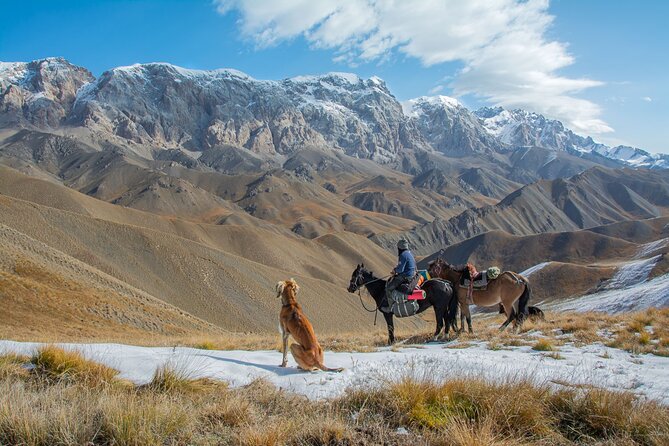
Big mountains, small roads, unforgettable horses. The Kel Suu horse trek takes you from Bishkek into Kyrgyzstan’s high Tian Shan, where turquoise water, sharp cliffs, wide valleys, and nomadic hospitality replace city noise. I like the careful mix of driving and riding, and I like that the small group size, capped at eight, keeps the trip personal. The main drawback is the physical demand: you need moderate fitness, comfort around horses, and patience for long road transfers.
You’ll spend six days moving between Naryn, the Kok-Kiya Valley, and Kel Suu Lake. Guide Sanjar receives especially warm praise for his humor, care, and knowledge, while driver Milran is noted for friendly service on the long minibus journeys. The $1,400 price is not cheap, but it includes transport, horses, horsemen, meals, equipment, and the border permit, which makes the cost easier to understand.
What makes this Kel Suu trek special
- A 3,791-meter mountain pass: The route crosses Car Pass, with broad views over the high country.
- A real horse journey: You ride 13 kilometers on day three, 18 kilometers on day four, and 12 kilometers on day five.
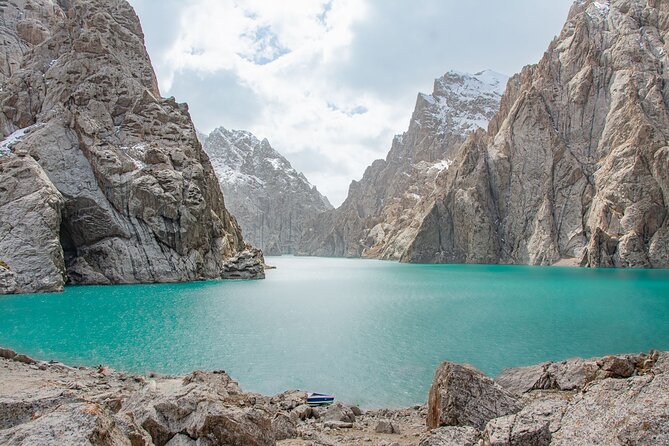
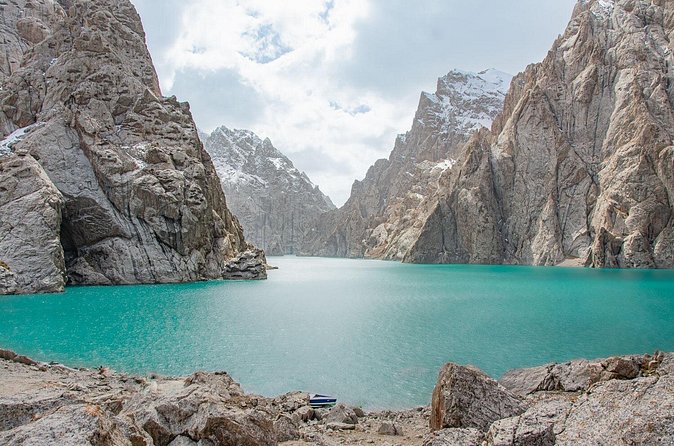
- Kel Suu’s turquoise water: The lake is framed by steep rock walls and remote alpine terrain.
- Small-group travel: A maximum of eight people allows more room for questions and help.
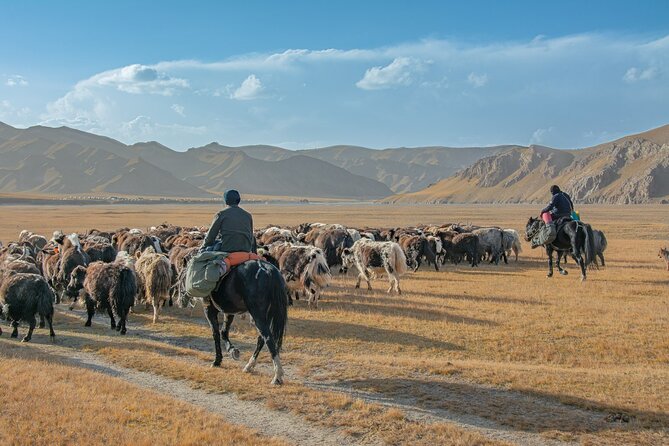
- Nomadic hospitality: The route includes homestay and yurt-camp experiences, plus meals connected to local mountain life.
- A complete Kyrgyzstan package: Transport from Bishkek, horses, horsemen, food, camping gear, and a border permit are included.
From Bishkek to Naryn, 315 kilometers of changing scenery
The trip begins after breakfast at 573 Frunze Street in Bishkek. Day one is mostly a road day, with about 315 kilometers to Naryn and roughly six hours of driving.
That distance matters. You are not simply being delivered to a trailhead. You are crossing from the capital toward a much higher and more remote part of the country, passing through valleys and smaller towns along the way. The drive helps you see how quickly Kyrgyzstan shifts from urban streets to open mountain country.
The route includes a stop at Burana Tower. Admission is listed as free, so this is a useful cultural break rather than an extra-cost attraction. By evening, you stay in a homestay in Naryn. That is a good choice for the first night: you get a bed and local contact before the more basic part of the journey begins.
I would treat day one as part of the adventure, not as wasted time. Still, if long drives wear you down, note that the return to Bishkek on day six covers the same approximate distance. This trip has plenty of scenery, but it also has serious road mileage.
More Hikes and Treks in Bishkek:
- Year-Round Adventure: 3 Days Horse Trek to Song Kul Lake
★ 5.0 · 16 reviews - Cardrona High Country Pub Trail Horse Trek (Intermediate level+)
★ 5.0 · 269 reviews - Rubicon Valley Horse Treks – 2 Hour River Trail Horse Trek
★ 5.0 · 196 reviews
Bosogo Pass and the open Ak-Sai Valley
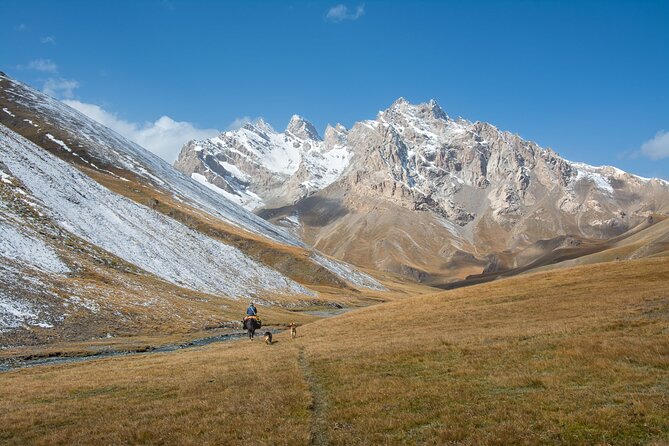
Day two starts with about an hour of driving from Naryn before the road climbs through the switchbacks of Bosogo Pass. The route then opens into the Ak-Sai Valley, surrounded by snow-capped peaks.
This is where the journey begins to feel properly remote. The high valley gives you a sense of scale that photographs rarely capture. Roads, settlements, and services become less central, while weather and mountain conditions matter more.
The day includes about 140 kilometers of driving and around three hours listed for the stop. You are still traveling by vehicle rather than spending the full day on horseback, which gives your body a useful rest before the riding begins.
That rhythm is one of the trip’s strengths. The organizers do not ask you to sit in a saddle for six straight days. You get road transfers, mountain stops, and riding days in a sensible sequence. On the other hand, the change in altitude and the rough mountain roads can still make day two tiring.
Your first ride through Kok-Kiya Valley
On day three, you meet your horse after breakfast and receive a short riding briefing from the guide. The ride covers about 13 kilometers, with 514 meters of ascent and 414 meters of descent, and takes roughly six hours.
The route follows a small valley, crossing rivers and winding through mountain terrain. This is not a riding-school exercise in a fenced arena. You are moving along natural trails where the horse does much of the work, while you learn to read the terrain and follow the horsemen’s direction.
The briefing is important even if you have ridden before. Mountain riding involves uneven ground, water crossings, slopes, and changing pace. The tour is suitable for people with moderate physical fitness, but the description does not suggest that advanced riding skills are required.
Your first day in the saddle can be the hardest adjustment. A six-hour ride may sound manageable, yet sitting on a horse for that long uses muscles you may not expect. Wear practical clothing, follow the guide’s advice, and do not treat the first ride as a race.
Kok-Kiya Valley is also a good place to appreciate the quiet side of Kyrgyzstan. There are no listed entertainment stops or busy attractions. The value comes from moving slowly through a large, open setting with horses, rivers, and mountain air around you.
Crossing Car Pass at 3,791 meters
Day four is the most demanding riding day. The route covers about 18 kilometers, with 470 meters of ascent and 488 meters of descent, and takes around six hours.
The key moment is Car Pass, at 3,791 meters. Reaching a pass at that height is not a minor viewpoint stop. You should expect thin mountain air, exposed terrain, and conditions that can change quickly. The high point gives you sweeping views over the surrounding country before the route continues toward Kel Suu.
This day is a strong reason to choose the tour, but also the clearest reason to prepare properly. Moderate fitness is the stated requirement, and that should be taken seriously. You need to be comfortable with a long day outdoors and with the physical movement of riding up and down mountain trails.
The horsemen are an important part of the experience. They handle the horses and help the group move safely through terrain that would be slow and awkward on foot. The horses are repeatedly praised for being well trained, which should give less experienced riders some reassurance, though no horse trek removes every physical or weather-related risk.
A few more horse rides around Bishkek worth a look
- 4 Days Issyk Kul & Chon Kemin with Nomadic Stay, Horse riding
★ 5.0 · 41 reviews - 2-Days in Song Kul Lake as Nomad – horseback riding & Yurt stay
★ 5.0 · 33 reviews - 3 Days Issyk Kul lake & Chon Kemin: Eagle show, horse riding
★ 5.0 · 33 reviews - Horseback riding on the mountains of Chon Kemin National Park
★ 5.0 · 31 reviews
Riding toward Kel Suu Lake
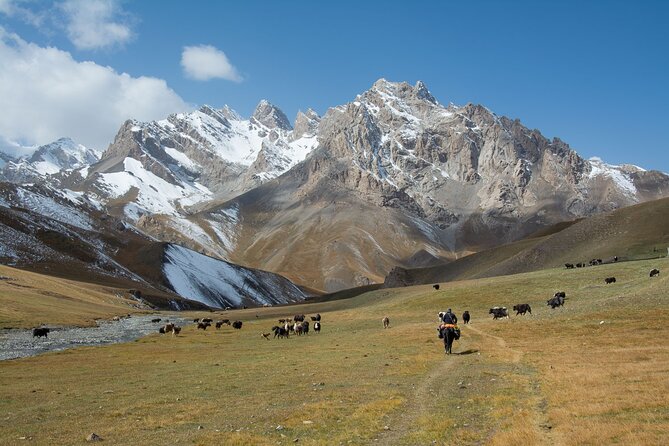
Day five brings the lake itself. After breakfast, you ride about 12 kilometers in roughly three hours, with 180 meters of ascent and 261 meters of descent. The route takes you toward Kel Suu, a high alpine lake known for turquoise water and steep cliffs.
The shorter riding time is welcome after the previous day’s 18-kilometer route. It gives you space to enjoy the setting instead of focusing only on distance. The lake’s appeal is its combination of color and isolation: the water looks striking against the rock walls, and the remote location keeps the mood calm.
Do not expect a resort-style lake visit. The attraction is the setting, not a long list of facilities or activities. You come for the ride, the mountain views, and the feeling of reaching a place that is difficult to access.
The itinerary also lists about 140 kilometers of driving on day five. That detail deserves clarification before you book. The day combines riding with a road transfer, and exact timing may depend on trail, weather, and border conditions. Ask the company how the riding and driving segments are arranged for your departure.
Homestays, yurts, tents, and mountain meals
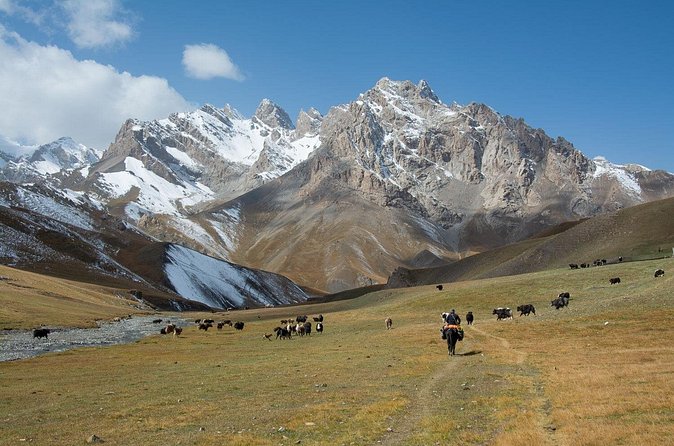
The tour description presents traditional yurt stays as part of the cultural experience, while the included equipment lists a tent, mats, gas, and cooking dishes. Day one specifically names a homestay in Naryn. Together, this suggests a mix of local accommodation and basic mountain camping, but you should confirm the exact sleeping arrangements for each night.
That small point matters. A yurt camp can offer a warm social setting and a direct connection with local herders. Tent camping gives you more independence but requires you to accept simpler conditions. The equipment list does not include sleeping bags, so you must bring one.
Meals are included for five breakfasts, five lunches, and five dinners. The package also covers meals for the tour staff. Bottled water is not included, so plan to carry or obtain drinking water according to the guide’s instructions. Coffee, soda, alcohol, and personal purchases cost extra.
Food is part of the cultural value here. You are not simply paying for transport to a viewpoint. You are spending time in a region where hospitality and shared meals are central to daily life. Exact menus are not provided, so you should bring any special food you personally require.
What the $1,400 price really covers
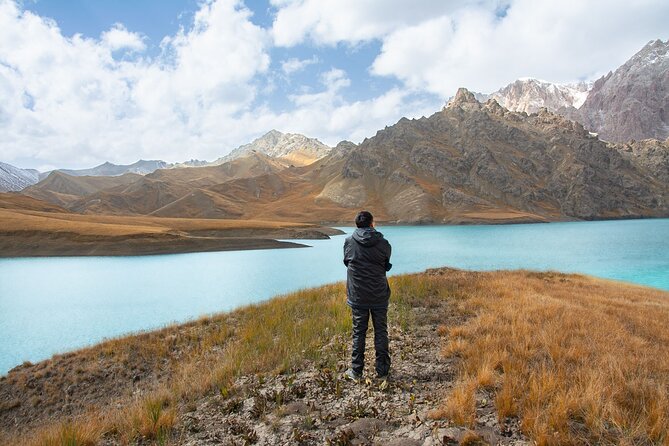
At $1,400 per person, this is a major travel purchase. The price includes transport to and from Bishkek, horses, horsemen, a border permit, camping equipment, and fifteen included meals. It also covers the staff’s meals, which is a useful sign that the package is designed as a full supported expedition rather than a bare horseback transfer.
The small group limit of eight improves the value. You are sharing the cost of vehicles, guides, horsemen, and logistics, but you are not joining a large coach group. A smaller party also makes it easier to get help with riding, ask questions, and adjust the pace.
You still need to budget for sleeping bags, helmets, insurance, drinks, bottled water, and personal expenses. Those exclusions are not minor if you are arriving without trekking equipment. The trip is better value for someone who already owns outdoor gear or is prepared to buy and pack it.
The price also reflects access. Kel Suu is remote, and reaching it requires long road transfers, horses, local staff, and a border permit. If you only want a quick lake visit, this will feel expensive. If you want a supported mountain journey with riding and local stays, the package is more persuasive.
The guides and the human side of the trip
A good guide can make or break a remote horse trek. Sanjar is praised for combining humor, passion, practical care, and a strong understanding of the region. Those qualities matter when you are tired, unsure about a horse, or trying to understand the customs around you.
Milran, the driver, is also singled out for friendly service. That is worth noting because the road sections are long. A reliable driver changes the feel of a six-hour transfer, especially when the route includes mountain roads and repeated photo stops.
The local horsemen are just as important. They manage the animals and help the group navigate the trail. You are not expected to handle every part of the expedition alone, but you should still arrive ready to listen and take responsibility for your own safety.
Who should book this horse trek?
I would recommend this trip to you if you want:
- Several days in remote Kyrgyz mountain country
- A genuine horse trek rather than a short tourist ride
- Time with local hosts and herders
- A small group and a supported route
- High passes, river crossings, and dramatic alpine scenery
- A trip that combines culture, road travel, and outdoor activity
I would hesitate if you want luxury accommodation, short transfer times, fixed urban comforts, or a gentle sightseeing holiday. The itinerary contains long drives, high passes, basic equipment, and several hours in the saddle.
You should also be honest about your riding experience and fitness. The tour asks for moderate physical fitness, and the riding distances are substantial. Bring a sleeping bag and arrange insurance before leaving. Helmets are not included, so decide in advance whether you will bring one.
Booking is available for the stated operating period from July 1 through September 15, 2026. Weather can cancel or change the trip, and the company may also cancel if the minimum group size is not reached. Cancellation is free up to 24 hours before the start time, with a full refund.
Should you book the Kel Suu horse trek?
Book it if the idea of reaching a turquoise alpine lake on horseback appeals more than a polished sightseeing circuit. The combination of Car Pass, Kok-Kiya Valley, local hospitality, and a small group gives this journey real substance.
Before paying, confirm the sleeping arrangements, bring your own sleeping bag, check the helmet situation, and ask how day five’s riding and driving are organized. If you accept the long transfers and basic mountain conditions, the $1,400 cost buys far more than a view of Kel Suu. It buys the route, the support, the horses, and time in a part of Kyrgyzstan that is not easy to reach on your own.
FAQ
Where does the Kel Suu horse trek begin?
The tour begins at 573 Frunze Street in Bishkek, Kyrgyzstan.
Where does the tour finish?
The activity ends back at the Bishkek meeting point.
How long does the tour last?
The tour lasts approximately six days.
What is the maximum group size?
The group is limited to a maximum of eight travelers.
Is transport from Bishkek included?
Yes. Transport from and back to Bishkek is included.
Are horses and horsemen included?
Yes. The package includes horses and horsemen.
Are meals included?
Yes. Five breakfasts, five lunches, and five dinners are included.
Is a sleeping bag provided?
No. Sleeping bags are not included, so you need to bring your own.
Is travel insurance included?
No. Insurance is not included in the tour price.
Can I cancel for a full refund?
Yes. You can cancel at least 24 hours before the experience start time for a full refund. Cancellations made less than 24 hours before the start time are not refunded.
Just added around Bishkek
- Year-Round Adventure: 3 Days Horse Trek to Song Kul Lake★ 5.0 · 16 reviews
- Chunkurchak Day Tour: Sky Bridge, Horse Riding and Archery★ 5.0 · 14 reviews
- Scenic Horse Riding tour to Chon Kemin Valley★ 5.0 · 3 reviews
- From Bishkek Horse Riding in Arashan Mountains★ 5.0 · 4 reviews
- 4 Days Issyk Kul & Chon Kemin: Horse Riding and Nomadic Yurt Stay★ 5.0 · 4 reviews
- A superb horse riding in Chon Kemin valley, 1 day★ 5.0 · 27 reviews
- 2 Days Song Kul Lake tour with Horse Riding★ 5.0 · 4 reviews
- 2-Day Adventure: Horseback Riding, Konorchek Canyons & Yurt Stay★ 5.0 · 2 reviews
Hiking & Trekking, compared.
Cardrona High Country Pub Trail Horse Trek (Intermediate level+)
Read our review →
Rubicon Valley Horse Treks – 2 Hour River Trail Horse Trek
Read our review →
Queenstown: Walter Peak Horse Trek & Queenstown Lake Cruise
Read our review →
Gold Discovery Trail Horse Trek Cardrona – Most popular!
Read our review →
Half Day Walter Peak Horse Trek and Cruise from Queenstown
Read our review →
3-in-1 Monteverde Cloud Forest Waterfalls, Wild Trekking and Horseback Riding
Read our review →More rides of this kind