
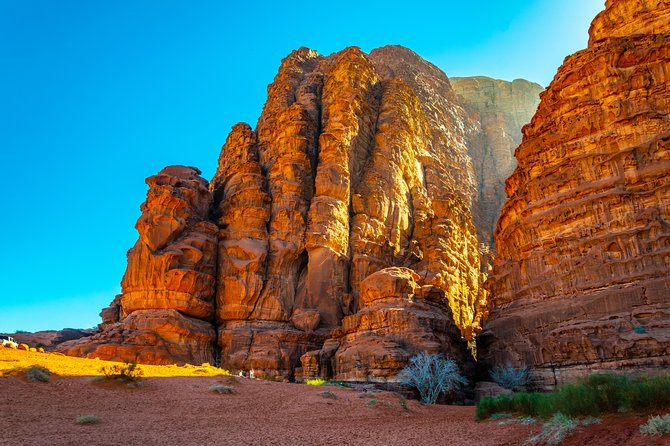
Review · AQABA
horse riding 2 hours tour in Wadi Rum
Wadi Rum rewards a little effort. This experience combines 4WD desert touring with short climbs, dune walking, sandboarding, and famous rock sites, so you do more than sit in a pickup truck. I especially like the hour at Al Ramal Red Sand Dune and the chance to explore Khazali Canyon, where old carvings cover the rock walls.
The small-group format, capped at 12 in the main description and 15 in the additional details, should make stops more manageable. Guides named Feras and Rashid received especially warm praise for their service. The main thing to check before booking is the title: despite being described as a horse riding two-hour tour, the supplied details describe a roughly three-hour 4WD excursion and do not mention horseback riding.
Key points to know before booking
- The advertised activity is mainly a 4WD desert tour: No horse riding appears in the provided inclusions or stops, so confirm this point before paying.
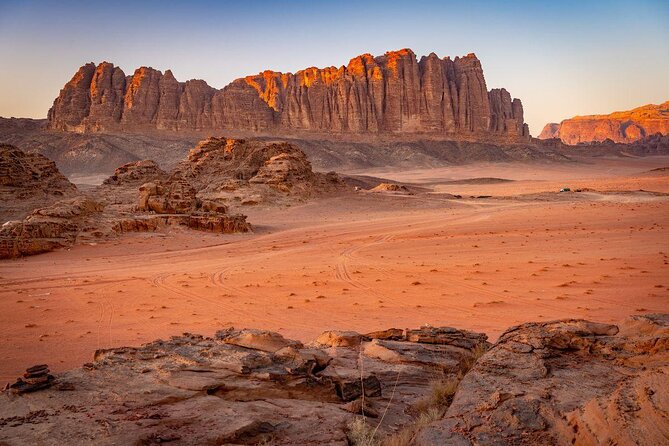
- Al Ramal Red Sand Dune gets the most time: You have about one hour to walk barefoot, climb, take photos, and use the free sandboards.
- The tour includes active stops: Lawrence’s Spring, Little Rock Bridge, and Khazali Canyon all involve some walking or climbing.
- Khazali Canyon adds ancient rock art: Thamudic, Nabataean, and Islamic inscriptions appear along the narrow fissure.
- The $100 price includes useful extras: Bottled water, tea or coffee, free sandboarding, and a Jordanian lunch are included.
- The meeting point is simple: Start and finish at Wadi Rum Rest House in Wadi Rum Village, with drop-off also described as available at the Visitors’ Center or a camp.
First, clear up the horse riding question
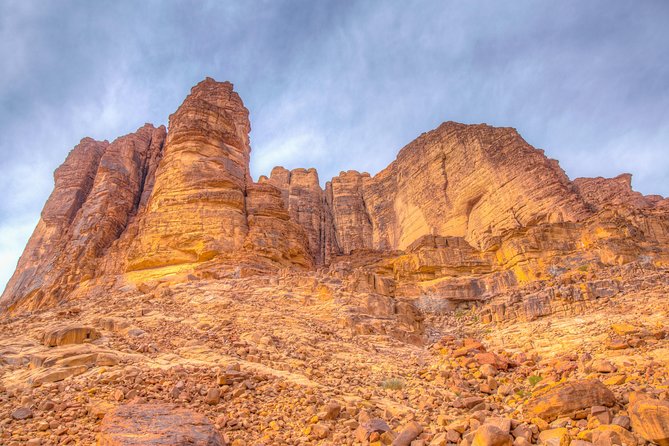
The title refers to a two-hour horse riding tour, but the detailed information describes something different. The experience lasts about three hours, uses a 4WD vehicle, and visits five desert locations. The listed inclusions mention water, coffee or tea, sandboarding, and lunch, but not horses or a riding session.
That does not make the desert tour a poor choice. It simply matters because horseback riding and a 4WD sightseeing trip are very different experiences. If riding is the reason you are booking, contact Wadi Rum Bedouin Guide Tours before confirming and ask exactly how much time, if any, is spent on horseback.
The schedule itself reads more like an active three-hour Wadi Rum circuit. You will be driven between the main stops, then given time to climb, walk, look at carvings, and play on the sand. That mix works well if you want more than a quick drive through the protected area.
More Desert Horse Riding in the world:
- Hurghada: Red Sea & Desert Horse Riding Tour with Swimming
★ 4.8 · 2,198 reviews - Hurghada: Sea & Desert Horse Tour, Stargazing, Dinner & Show
★ 4.5 · 1,592 reviews - Hurghada: Arabian Desert and Sea Horseback Adventure
★ 4.5 · 778 reviews
What the $100 price buys you
The listed price is $100 per person. That is not a bargain-basement desert transfer, but it covers more than transport from one point to another. You get a guided route through several major sites, bottled water, coffee or tea, free sandboarding, and a lunch with Jordanian specialties.
The value depends on how you use the active stops. If you stay in the vehicle and treat this as a photo drive, the price may feel high for three hours. If you climb the bridge, walk the red dune, inspect the carvings, and use the sandboard, the package offers a fuller experience.
Lunch also matters. A meal in the middle of a desert outing saves you from arranging food separately, and the inclusion of local dishes adds something more useful than a generic snack. The exact menu is not specified, so do not book expecting a particular dish.
There is one small point to watch: the overview calls this a full-day tour, while the duration is listed as approximately three hours. The stop times add up to about three hours, so plan around the shorter figure unless the operator confirms a longer day.
Meeting at Wadi Rum Rest House
The tour begins at Wadi Rum Rest House in Wadi Rum Village. You also receive drop-off at the Visitors’ Center or any camp, according to the tour details, which is useful if you are staying inside the desert area.
The information also says the activity ends back at the meeting point. Since both the meeting place and ending point are clearly stated, you should not assume hotel pickup in Aqaba is included. The location is in the Wadi Rum area, not central Aqaba, so check your own transport plans carefully.
A mobile ticket is provided, and confirmation is issued at booking. The activity is also listed near public transportation, though no specific route or transfer is supplied.
Lawrence’s Spring: good views, modest water
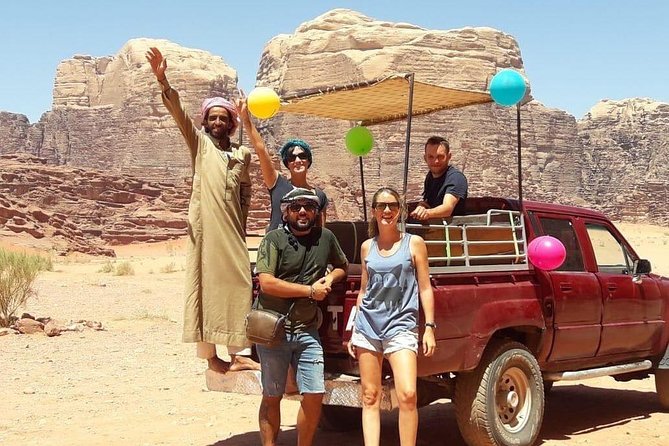
The first stop is Lawrence’s Spring, about 2 kilometers southwest of Rum village. Reaching the spring means making a short scramble toward a fig tree, so this is not a flat roadside stop.
The pool itself is described as a stagnant puddle, and that is useful to know before you arrive. The appeal is not the water. It is the view across the desert and the connection to T. E. Lawrence, whose writing helped make Wadi Rum famous.
You should allow about 30 minutes here. That gives you time to climb up, look across the open desert, and take pictures without expecting a grand natural pool. Wear shoes with a firm grip, since even a short scramble can be awkward on loose rock.
This is a good early stop because it gives you a first look at the scale of the area. The spring is more about setting and story than spectacle at ground level.
More Two-Hour Trips in the world:
- Agadir and Taghazout: 2-Hour Horseback Ride on the Beach
★ 4.6 · 888 reviews - 2-Hour Horseback Riding through Red Rock Canyon
★ 5.0 · 838 reviews - 2 Hour Monument Valley Horseback Tour
★ 4.5 · 458 reviews - The Best Horse Riding Experience in Gran Canaria (2 hours)
★ 4.5 · 349 reviews
Lawrence’s House and the story behind it
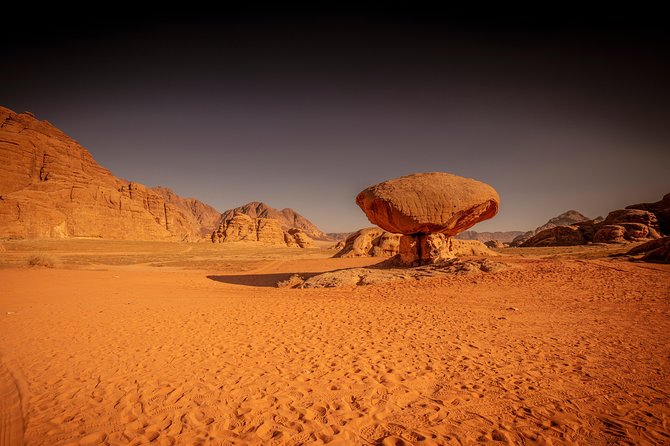
The next stop is known as Lawrence’s House, although nobody is certain that Lawrence actually lived there. Stories say he stayed here or stored weapons during the Arab Revolt, but the structure itself rests on the remains of a Nabataean building and an older water cistern.
That uncertainty is part of the appeal. You are not looking at a perfectly preserved residence with a clear chain of ownership. You are seeing a small ruin in a remote setting, attached to a local story that has become part of the standard Wadi Rum route.
A Nabataean inscription near the building refers to the ancient name Iram. The ruins may be modest, but the view toward the red dunes is the real reward. Like Lawrence’s Spring, this stop lasts about 30 minutes.
I would keep your expectations sensible. If you want a large archaeological site with reconstructed rooms, this will disappoint. If you enjoy old traces, desert silence, and stories that remain partly uncertain, it earns its place.
Al Ramal Red Sand Dune: the active centerpiece
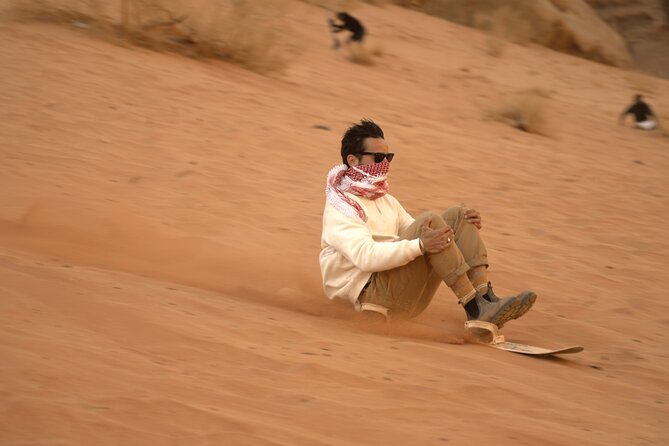
Al Ramal, also called the Red Sand Dune or Al Hasany, receives about an hour. This is the strongest part of the tour for most people who want to move around rather than remain seated.
Iron oxide gives the sand its rust-red color. The dune rises against a cliff face, making it easy to recognize and highly photogenic. The sand is fine and soft, and you can walk up barefoot if that feels comfortable.
The climb is the main activity. Walking uphill through soft sand takes more effort than it looks, but you can set your own pace. Some people will want to reach the upper slope for the view, while others may prefer a shorter walk and time for photographs.
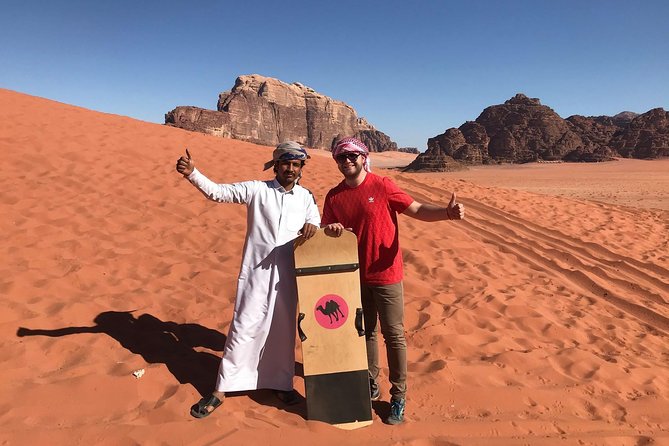
Free sandboarding is included, which adds real value here. You do not need to pay an extra activity fee to try it. The supplied details do not specify the number or type of boards, so ask the guide how the equipment is handled when you arrive.
This is also the stop where timing matters most. An hour gives you room for the climb, photographs, sandboarding, and a rest. If you are not comfortable with steep walking, the soft surface may be tiring. The tour does not promise a flat alternative, so keep that in mind.
Little Rock Bridge: an easier climb
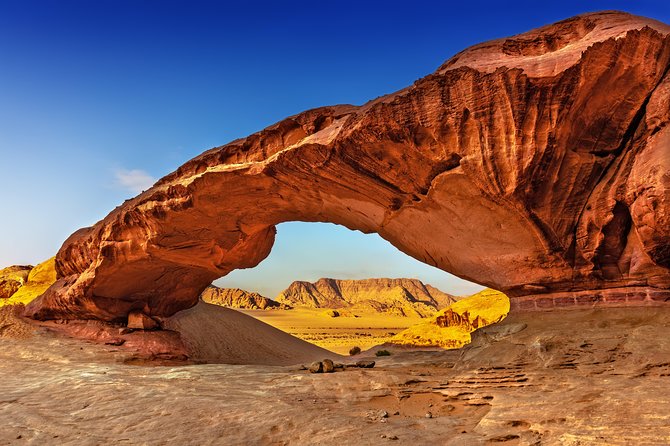
Little Rock Bridge is in the Wadi Rum Protected Area and takes about 30 minutes. It is described as easy to climb and suitable for families with children or anyone who feels uneasy with greater heights.
The bridge gives you a broad view over the desert without demanding the kind of nerve that a narrow or exposed rock climb might require. That makes it a useful contrast to the red dune, where loose sand works your legs in a different way.
Still, easy is a relative word. You will be climbing rock, not walking up a paved ramp. Take care with your footing and listen to the guide’s advice about the route. The short stop should be enough for the climb, a look around, and photos.
This is likely the most approachable active stop on the route. If your group includes different ages or fitness levels, Little Rock Bridge gives everyone a chance to participate.
Khazali Canyon and its carved walls
Khazali Canyon offers the most direct look at the area’s old inscriptions. The canyon cuts into Jebel Khazali through a narrow fissure about 100 meters long. Inside, the walls carry Thamudic, Nabataean, and Islamic inscriptions, along with drawings of people and animals.
Among the notable carvings are images of antelopes and soles of feet. The foot images may have had religious meaning, though the supplied information does not provide a firm interpretation. This is a place for looking closely rather than rushing through for a single photograph.
You have about 30 minutes here. The canyon is narrow, so the experience changes from open desert views to close rock walls and shaded passage. That contrast helps the route feel varied, even though the stop is brief.
This stop also rewards a guide who points out details. Ask about the different writing styles and the ancient names connected with the area. The information says a French epigraphist, Savignac, recorded the engravings in 1932, giving the site a documented place in modern study as well as its older markings.
The pace, group size, and guide service
The group is described as small, with a cap of 12 in the highlights and a maximum of 15 in the additional information. That difference is worth noting, but either number is smaller than a large coach group.
A smaller group helps at the dune and canyon. You spend less time waiting for people to leave the vehicle, and it is easier to ask a question or request help with a climb. It also means the pace may depend on the people sharing your vehicle.
Named guides Feras and Rashid received particularly strong praise. Feras was associated with pickup and the desert outing, while Rashid was praised for making the experience feel top-notch. You should not assume a specific guide will lead your departure, but those names give you useful people to ask for when confirming arrangements.
The guides’ role matters here because the route combines sites with uncertain stories, ancient inscriptions, and active sections. A good guide can help you understand why a simple ruin or a small puddle matters without pretending every legend is proven fact.
Who will enjoy this tour most
I would recommend this experience to you if you want a short, active introduction to Wadi Rum. It suits people who like combining vehicle touring with easy-to-moderate walking, climbing, photography, and a simple outdoor activity such as sandboarding.
Families may appreciate Little Rock Bridge and the limited group size. The tour is also listed as suitable for most participants, and service animals are allowed. Even so, the red dune and rock stops require movement, so you should judge your own comfort with uneven ground.
This is less suitable if your priority is a long horseback ride. It is also not ideal if you want a slow, quiet desert camp experience, since the three-hour route moves between several named sites.
The tour may work well for someone with limited time in Wadi Rum, provided the horse riding question is settled first. You see a good spread of locations without committing to the full length of a day in the desert.
Practical advice for a smoother outing
Wear shoes that can handle rock and soft sand. Lawrence’s Spring involves a scramble, Little Rock Bridge requires a climb, and the dune is easier with footwear you can remove or shake clean.
Bring a phone or camera with enough battery. The route offers views from the spring, red sand against rock, the bridge, and the canyon walls. WiFi is not included on board, so do not plan to rely on a vehicle connection.
Take water even though bottled water is included. The supplied bottle is useful, but climbing a dune and walking in open desert can make you want more. Tea or coffee is also provided.
Keep the cancellation deadline in mind. You can receive a full refund if you cancel at least 24 hours before the local start time. Cancellations or changes made inside that window are not accepted for a refund.
Should you book the Wadi Rum tour?
Book it if you want a compact Wadi Rum outing with several major stops, a red dune, free sandboarding, lunch, and some easy climbing. The 4WD route gives you variety, and the strong praise for guides such as Feras and Rashid adds confidence to the service.
Do not book it without clarification if horseback riding is essential. The detailed experience describes a three-hour desert tour, not a two-hour horse ride. At $100 per person, the package can offer fair value when you use the activities and included meal, but the product needs to match what you actually want.
FAQ
Is this a horse riding tour?
The detailed information describes a roughly three-hour 4WD Wadi Rum tour. Horse riding is not listed among the stops or inclusions, so confirm this directly with the provider before booking.
How long does the experience last?
The duration is approximately three hours. The listed stops are Lawrence’s Spring, Lawrence’s House, Al Ramal Red Sand Dune, Little Rock Bridge, and Khazali Canyon.
How much does the tour cost?
The listed price is $100 per person.
Where does the tour start?
It starts at Wadi Rum Rest House in Wadi Rum Village, Jordan.
Where does the tour finish?
The activity ends back at the meeting point. Drop-off is also described as available at the Visitors’ Center or any camp.
Is lunch included?
Yes. Lunch featuring Jordanian specialties is included.
Is sandboarding included?
Yes. Sandboarding is offered free of charge.
Is bottled water provided?
Yes. Bottled water, coffee, and tea are included.
How large is the group?
The highlights describe a maximum of 12 people, while the additional information gives a maximum of 15. Confirm the expected group size when booking.
Can I cancel for a full refund?
Yes, if you cancel at least 24 hours before the local start time. Cancellations or changes made less than 24 hours before the start are not accepted for a refund.
Just added around the world
- Zanzibar: Horseback Riding and Turtle Swimming Tour★ 3.3 · 4 reviews
- Zanzibar: Swimming With Horse and Clear Kayaking Tour★ 3.9 · 5 reviews
- Zakynthos: Yotomu Horse Riding and Swimming Experience★ 4.7 · 80 reviews
- Zanzibar: Horseback Riding and Turtle Aquarium Visit★ 4.3 · 4 reviews
- Zanzibar: Horse Riding and Kayaking with Video and Photos★ 4.9 · 10 reviews
- Waco: Sunset Horseback Ride★ 4.8 · 10 reviews
- Westport: Beach and Countryside Guided Horse Ride★ 4.8 · 6 reviews
- Xi’an: Half-Day Terracotta Warriors & Horses Museum Tour★ 4.4 · 7 reviews
Desert Horse Riding, compared.
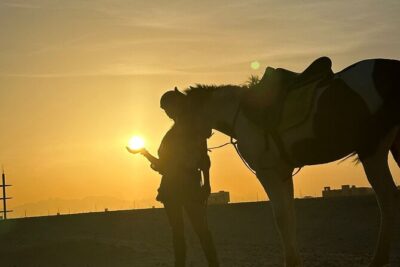
Red Sea & Desert Horse Riding Tour with Swimming
Read our review →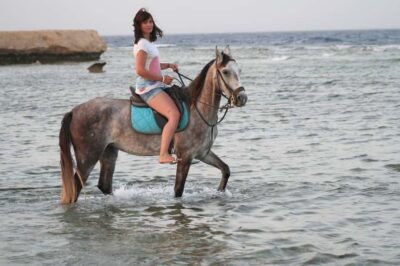
Sea & Desert Horse Tour, Stargazing, Dinner & Show
Read our review →
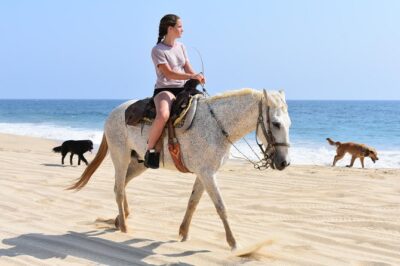
Cabo Desert Off-Road & Beach Horseback Combo and Tequila Tasting
Read our review →
Sea & Desert Horse Riding tour/w Swimming&Transfer
Read our review →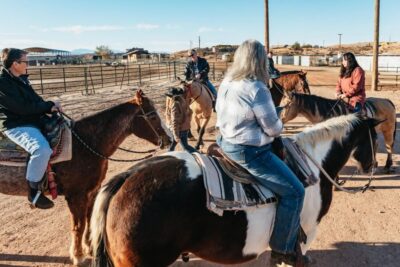
Almeria: Horse Riding Tour Through the Tabernas Desert
Read our review →
More rides of this kind